Backend development is the backbone of every modern web application. While users interact with buttons, forms, and animations on the front end, the backend is responsible for processing requests, managing data, handling authentication, and ensuring everything works reliably behind the scenes.
If you're planning to become a backend developer in 2026, you don't need to learn every programming language or framework available. Instead, focus on building a solid foundation and gradually expand your skills. This roadmap will guide you through the essential technologies and concepts every beginner should learn.
Before writing any backend code, understand how websites communicate over the internet. A backend developer should know what happens when a user enters a URL into a browser.
Important concepts include:
Understanding these fundamentals makes debugging and application development much easier.
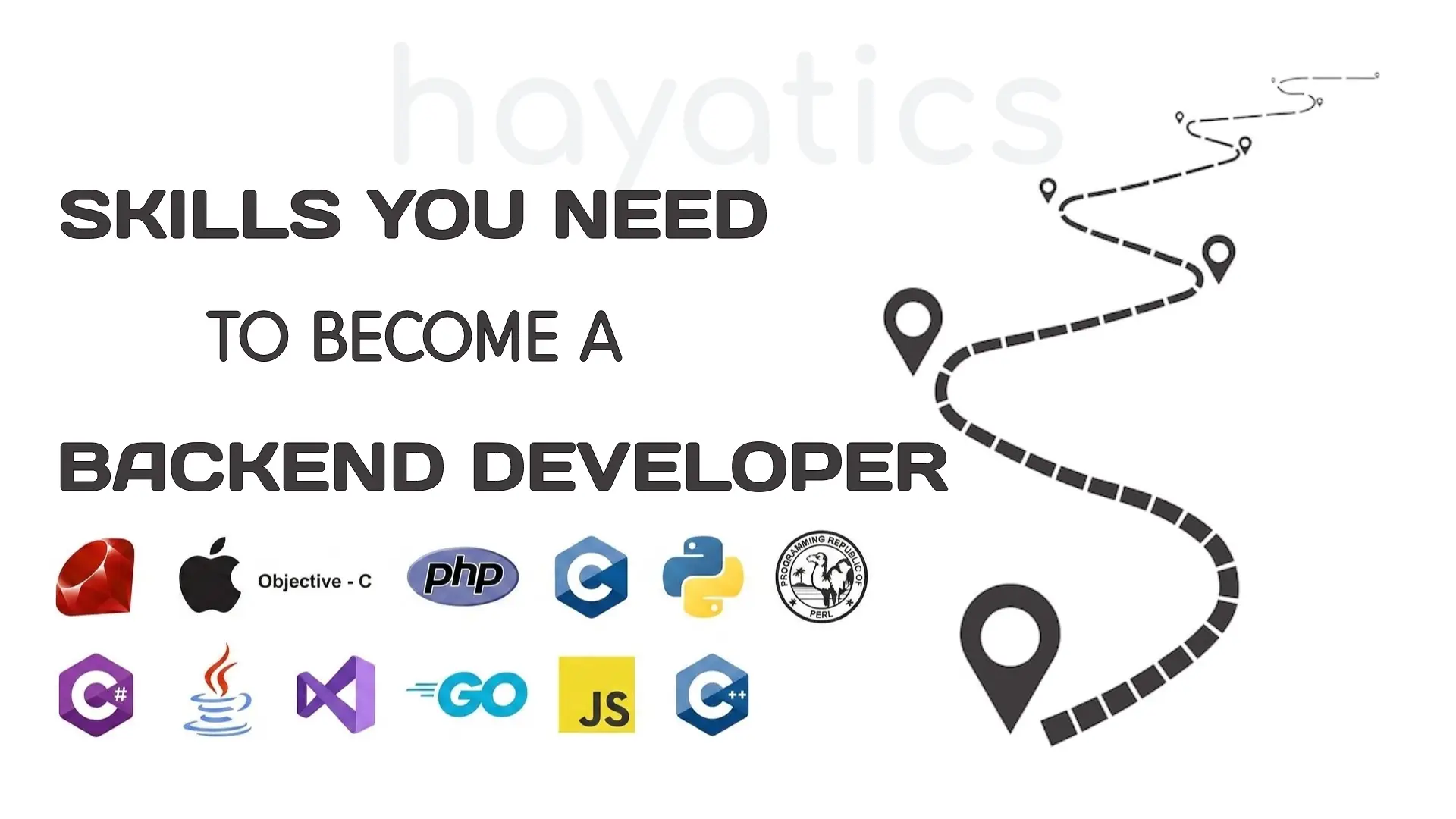
The programming language is your primary tool as a backend developer. There is no "best" language—the right choice depends on your goals and the projects you want to build.
Popular backend languages include:
For beginners, Python is often recommended because of its simple syntax, powerful ecosystem, and frameworks like Django and FastAPI. JavaScript with Node.js is another excellent choice if you want to work across both frontend and backend development.
Many beginners skip algorithms because they seem difficult. However, understanding data structures helps you write efficient applications and perform well during technical interviews.
Focus on learning:
Practice regularly on coding platforms to strengthen your problem-solving skills.
Git is an essential skill for every developer. It allows teams to collaborate, track code changes, and safely manage software development.
Learn common Git commands such as:
Hosting your code on GitHub or GitLab also helps you build an impressive portfolio.
Every backend application stores information somewhere. Databases allow applications to save, retrieve, and update data efficiently.
Learn SQL thoroughly, including:
Frameworks provide ready-made tools that speed up development and help you follow industry best practices.
Popular backend frameworks include:
Instead of building everything from scratch, frameworks let you focus on solving business problems.
Modern applications communicate using APIs. As a backend developer, you'll spend a significant amount of time building and maintaining RESTful services.
Learn how to:
Later, you can explore GraphQL and gRPC for more advanced communication patterns.
Security is one of the most important responsibilities of backend developers.
Essential topics include:
Never store passwords as plain text. Always use secure hashing algorithms provided by trusted libraries.
Most backend applications run on Linux servers. Becoming comfortable with the terminal will make deployment, debugging, and server management much easier.
Useful commands include:
Docker allows applications to run consistently across different environments by packaging them into containers. Many companies now consider Docker a standard backend development skill.
Learn about:
Caching improves application performance by reducing unnecessary database queries and computation.
Popular caching technologies include:
Understanding when and how to cache data is an important skill for building scalable systems.
Not every task should happen immediately. Background processing makes applications faster and more reliable.
Popular tools include:
Examples include sending emails, processing videos, generating reports, and handling notifications.
Writing tests ensures your code works correctly and prevents bugs when making future changes.
Types of testing include:
A well-tested application is easier to maintain and more reliable in production.
Once your application is complete, it needs to be deployed so users can access it.
Learn about:
Understanding cloud deployment is becoming increasingly important for backend developers.
Projects are the fastest way to learn and demonstrate your skills. Employers value practical experience more than certificates alone.
Ideas for beginner projects include:
Host your projects on GitHub and deploy them online so recruiters can easily review your work.
Backend development is a rewarding career path that combines programming, problem-solving, and system design. The journey may seem overwhelming at first, but you don't need to master every technology immediately. Start with the fundamentals, build practical projects, and continuously improve your knowledge.
Remember that the best backend developers are lifelong learners. New frameworks and tools will continue to emerge, but a strong understanding of programming fundamentals, databases, APIs, security, and software engineering principles will always remain valuable.
Take one step at a time, stay consistent, and focus on building real-world applications. Every project you complete brings you closer to becoming a confident and capable backend developer.